01 / SIGNS TO DISCUSS
By 6 months
- Few or no big smiles or other warm, joyful and engaging expressions
- Limited or no eye contact
Autistic people have individual strengths, preferences, and support needs. A respectful conversation begins with the person’s goals and their existing developmental, educational, and healthcare supports.
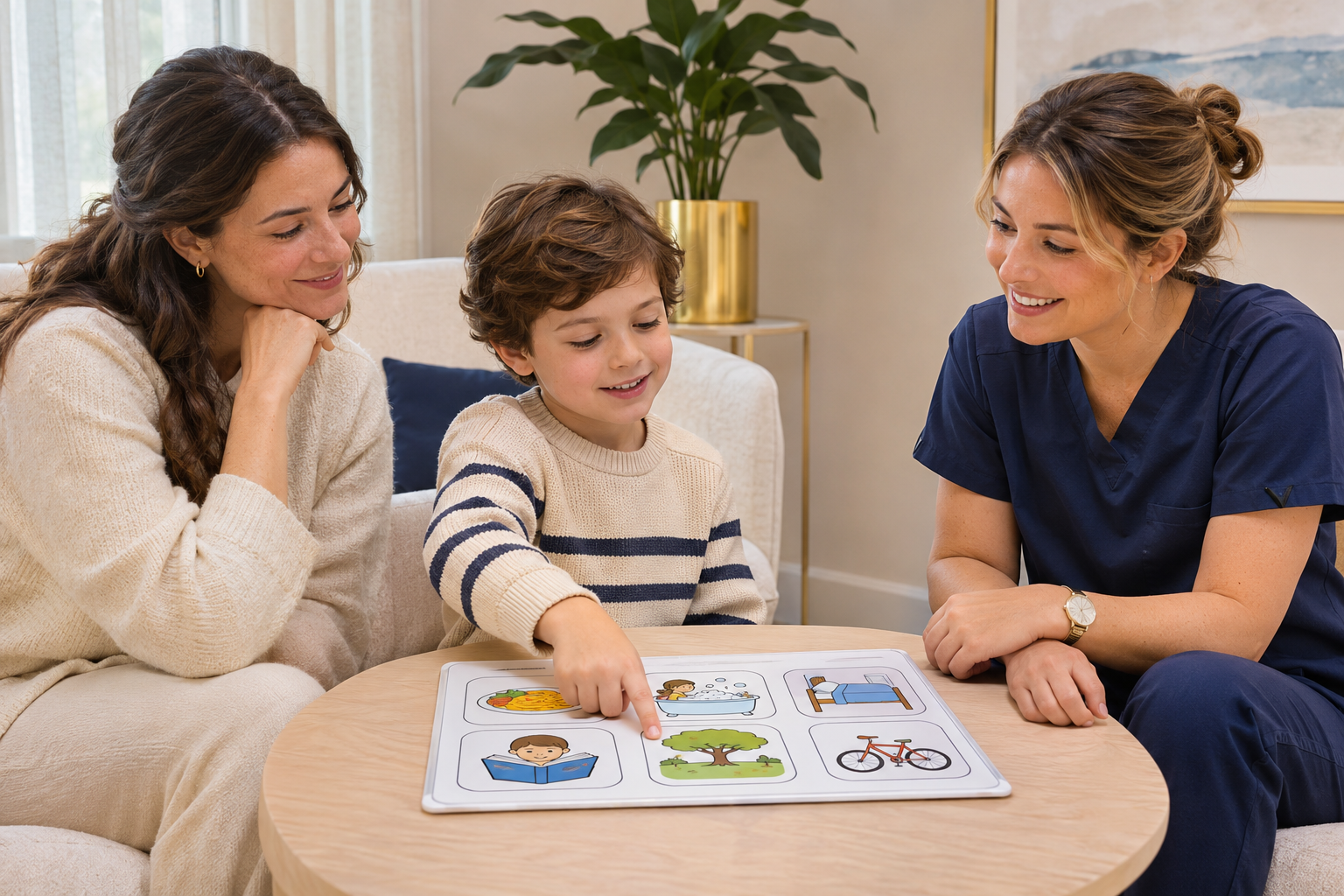
Autism signs vary from child to child. Not every autistic child shows every sign, and children without autism may show some of these behaviors. The examples below can prompt a conversation with a healthcare professional; they are not a diagnostic checklist.
Sources: Autism Speaks: Signs of autism ↗ · CDC: Signs and symptoms ↗
The DSM-5 introduced three levels to describe the support an autistic person may need in social communication and restricted or repetitive behaviors. These descriptions help guide a conversation about individual needs.
Communication: Starting conversations, maintaining back-and-forth interaction, or navigating social situations may be difficult without support.
Daily life & flexibility: Changes, transitions, planning, and organization can affect independence.
Communication: Noticeable difficulties with verbal or nonverbal interaction remain even when support is available.
Daily life & flexibility: Repetitive behaviors and difficulty coping with change can interfere across several settings. Shifting attention may cause distress.
Communication: Significant communication difficulties can greatly limit initiating or responding to interaction.
Daily life & flexibility: Intense difficulty with change and repetitive behaviors can affect many areas of daily life, requiring extensive individualized support.
Plain-language summaries, not the full diagnostic criteria. Autism Speaks: support levels ↗ · Seattle Children’s: understanding support needs ↗
Researchers are studying whether cell-based approaches can improve specific areas such as social communication and everyday functioning. Some studies report encouraging changes, but consistent benefit has not been established. These approaches are experimental—not a cure or an FDA-approved treatment for autism.
Mesenchymal stromal cells (MSCs) release signaling substances that can influence immune activity. Researchers are testing whether this could affect neuroinflammation in some autistic people and, in turn, support communication or daily functioning. This is a proposed mechanism, not proof of clinical improvement. Autism is complex and is not simply an inflammatory condition. Read the research rationale ↗
The product matters: Cord-tissue MSCs and cord-blood mononuclear cells are different cell products. Findings for one product, study population, or protocol cannot be assumed to apply to another.
Research reviewed November 2, 2026. Educational information; not a statement that these interventions are offered at TNC.
Share relevant assessments, communication preferences, sensory needs, current supports, and any medical concerns. Families can bring questions and observations while including the autistic person in decisions in a way that works for them.
What evidence supports the exact intervention? What risks and burdens would it add? How can we address specific medical concerns and coordinate with existing support teams?
Stem cell and exosome products are not FDA-approved treatments for autism. They should not be described as a cure or as proven to improve communication, development, or behavior.
These educational topics do not confirm treatment availability or establish candidacy. Ask a qualified provider to review the specific proposal.
View patient resources ↓Contact your clinic about consultation availability, fees, and records to provide. Your next step may be further evaluation or a specialist referral.
Find your TNC clinic ↗FDA: Stem cells and exosomes consumer alert ↗
Educational information reviewed October 29, 2026. Discuss your individual circumstances with a qualified provider.